

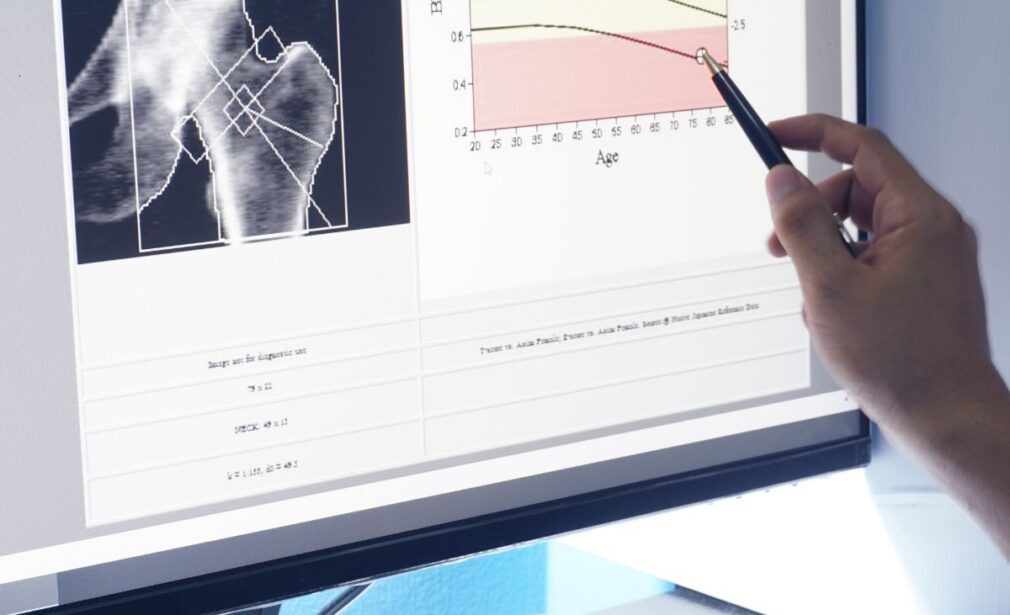
Bone Mineral Density (BMD) Assessment Using DEXA Technology
High-Accuracy Osteoporotic Risk Assessment | Aligned with WHO Global Diagnostic Protocols
Osteoporosis is a silent and progressive skeletal disease characterized by a reduction in bone mass and deterioration of bone microarchitecture, increasing the risk of fragility fractures. Timely diagnosis and personalized treatment are crucial for optimal outcomes.
At YGEIA Group Centers, bone density testing is performed using state-of-the-art DEXA systems, in compliance with the World Health Organization (WHO) diagnostic protocols and the International Society for Clinical Densitometry (ISCD) guidelines.
Indications
- Perimenopausal or postmenopausal women
- Men aged ≥70 years or younger with clinical risk factors
- Patients with endocrine, metabolic, or rheumatic diseases
- Long-term corticosteroid use or medications affecting bone health
- History of fragility fractures or family history of osteoporosis
Stratified Diagnostic Approach – Pre- vs Postmenopausal Women
Assessment is tailored based on age, hormonal status, and menopausal phase:
- Premenopausal women: Evaluated using Z-score interpretation
- Postmenopausal women: Evaluated using T-scores and fracture risk estimation
Procedure & Technological Advantages
The examination is conducted at certified YGEIA Group Centers, and is non-invasive and painless. Patients are asked to remove all clothing and metallic objects, and are provided with a custom-designed, radiolucent gown to ensure optimal imaging conditions and artifact-free results.
Scans are performed at key anatomical sites: lumbar spine, proximal femur, and, where indicated, forearm. The radiation dose is minimal and entirely safe.
Historical Data Comparison & Interoperability
Our systems support:
- Archiving and follow-up of longitudinal data
- Comparison with prior BMD tests, even if performed at external facilities or with different devices
- Cross-platform data interoperability, enabling integrated assessment and monitoring over time
This capability enhances clinical decision-making and supports personalized osteoporosis management for every patient.